Enchanting archaeological sites, atmospheric colonial towns and
tropical beaches – Cambodia is an inviting and cheap getaway for
intrepid travellers
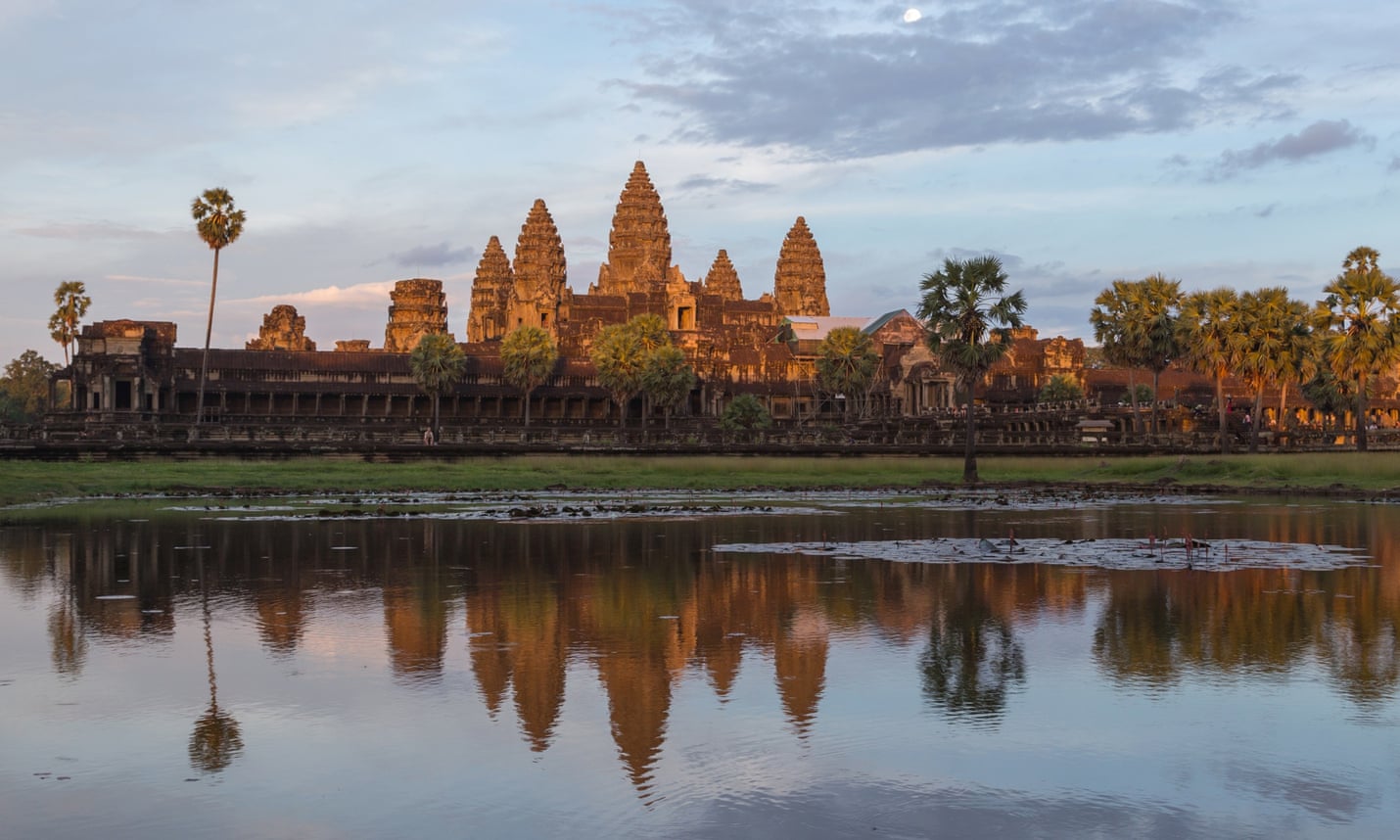
Angkor Wat is Cambodia’s star attraction but there is plenty more to see. Photograph: Anuak Jaimook/Flickr Vision
Infrastructure in Cambodia
is not as well developed as in neighbouring Thailand and Vietnam, and
floods and poor roads make travel challenging during the monsoon season,
from May to October, but cheap frequent bus services, a good domestic
airline and easygoing locals make travelling here an adventure – and
easier than you might think.
From Siem Reap
Start in Siem Reap by following our Angkor Wat holiday itinerary,
which focuses on ‘Temple Town’, the springboard for exploring the Khmer
empire’s world heritage archaeological sites, and the surrounding area.
You can get to Siem Reap by train or bus from Bangkok (allow a full
day) or on a short flight from Bangkok, Singapore, Ho Chi Minh City and
other Asian capitals. See our Top 10 hotels, hostels and B&Bs near Angkor Wat for places to stay.
Off-the-beaten-track temples
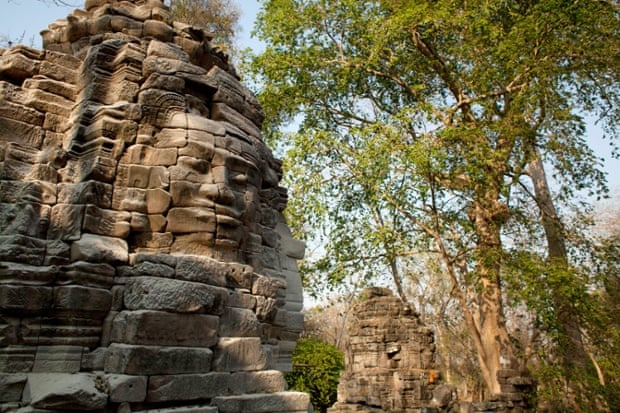
Banteay Chhmar, near Battambang.Photograph: Dennis Drenner/Alamy
If you’re not “templed out”, you could spend two days seeing these alluring yet little-visited temples.
Prasat Preah Vihear
Perched spectacularly on a
plateau in the Dangrek mountains, Prasat Preah Vihear (£3 entry) is a
sprawling, Unesco world heritage listed temple from the Angkor-era. It
is 135 miles northeast from Siem Reap and straddles the Thai border.
It’s just about doable on a day trip, however, an overnight stay at Preah Vihear Hotel (doubles from £49), 19 miles away, allows you to savour both sunset and sunrise at the site. Siem Reap-based Beyond Unique Escapes offers a tours from US$80 per person.
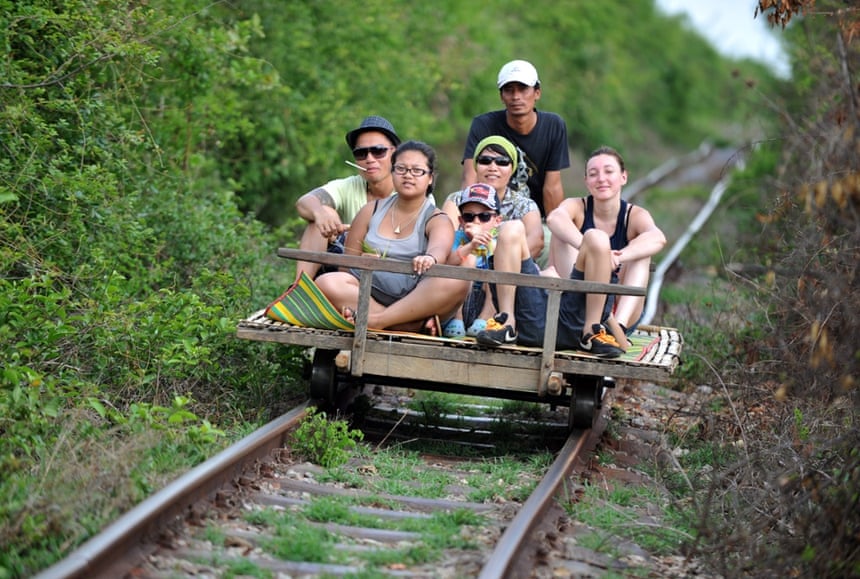
The ‘bamboo train’ ride at Battambang.Photograph: Geoff Moore/REX
Riverside Battambang is Cambodia’s second largest city although it
feels like a country town. Most visitors are here to hurtle through the
rice fields on the “bamboo ‘train”, known in Khmer as a norry (one
hour, £3), a wooden frame covered with slats of bamboo and powered by a
motorbike engine that runs on a single-track railway built by the
French in the 1920s. They are fun, but it’s worth spending a couple of
days taking in the city’s architecture and arts, sampling street food,
cycling to villages, and doing tuk tuk tours into the countryside to see
Angkorian temples and visit cottage industries.
Check into colonial-style Bambu Hotel (doubles from $90) in the centre or for a village experience try the Khmer wooden houses at Maisons Wat Kor (doubles from $94) in Wat Kor village.
Battambang’s protected heritage quarter is home to 800 significant
buildings, including a 150-year old Chinese temple, charming
shop-houses, elegant colonial French buildings, glittering pagodas and
striking modernist buildings from the New Khmer Architecture movement. Battambang Bike offers architecture and art-themed cycle tours ($20) and village bike rides and also rents bicycles.
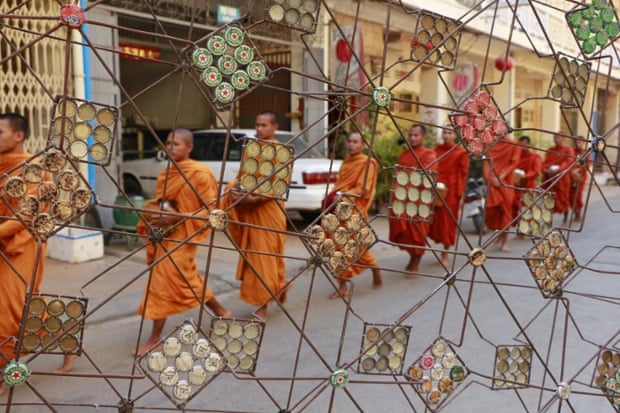
Monks outside the Maek Maek gallery, in front of sculpture by Battambang artist Mao Soviet. Photograph: Claire Knox/The Guardian
Battambang
is Cambodia’s rice bowl and boasts the country’s finest food. Visit
Phsar Boeung Choeuk market to see fresh local produce. Try noodles and
dumplings handmade to order at Lan Chov Khorko Miteanh (145 Street 2) or
dine on pan-Asian cuisine at stylish Jaan Bai
(Street 2), a social enterprise restaurant and bar that trains and
employs disadvantaged kids, with a menu by Asia’s best chef, David Thompson of Nahm Bangkok. At sunset, stalls set up around Phsar Nath market to sell soups, curries and barbecue meats. Battambang Resort runs a fantastic snack tour (from $7) to sample street food at riverside stalls and eateries.
You can hire a tuk-tuk for around £9 a day, or £6 half a day, and
take an excursion into the lush countryside to see artisanal producers
make incense, cotton kramas (traditional Cambodian checked
scarves), rice paper, noodles, and rice wine. En route visit
Angkorian-era temples such as crowd-free Ek Phnom and Wat Banan, and
Mount Sampeau, site of the Killing Caves, where the Khmer Rouge dumped
its victims bodies; at dusk watch millions of bats emerge for a cave.
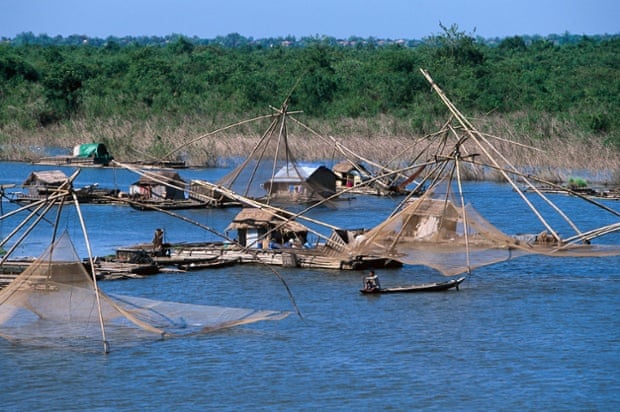
Traditional fishing methods at Kompong Cham on the Mekong river.Photograph: Look, die Bildagentur der Fotografen/Alamy
The cooler eastern provinces of Mondulkiri and Ratanakiri are home to
lazy rivers, rubber plantations, rolling hills, forested mountains,
impressive waterfalls and endangered wildlife.
Kompong Cham and Kratie
The provincial capital,
Kompong Cham, is on the Mekong and 75 miles northeast of Phnom Penh, is
an easy bus ride (2½ hours, around £3) from the capital. It makes for a
relaxing stop for a riverside walk, a bike ride over a bamboo bridge to
Koh Paen island, or a sunset cruise (£6).
Most travellers make a beeline for Kratie by bus (three hours from
Kompong Cham, £3; five hours from Phnom Penh, £7), also located on the
Mekong. Stay at friendly Le Tonlé Tourism Training Center (doubles from $10) in Kratie, which trains underprivileged youths, or a traditional Khmer timber house at Rajabori Villas (doubles from $60) on idyllic Koh Trong island, home to a Vietnamese floating village.
Rich in French colonial architecture, Kratie is a pleasant place to
kick back. The main attraction, however, is the endangered freshwater
Irrawaddy dolphins that can be seen 10 miles north of town. Take a moto
(£3) or remork (£6), then a boat (£5).
Stung Treng and Ban Lung
Two and a half hours
from Kratie by bus, Stung Treng is another laidback riverside town that
makes a good base for seeing the Irrawaddy dolphins from the villages of
O’Svay and Preah Rumkel, where wetlands are rich in birdlife.
A further two and half hours away by bus, Ban Lung is a base for
various activities, including kayaking, mountain biking, trekking in
Virachey national park to see some of Cambodia’s last remaining virgin
forest, visits to ethnic minority villages, and swimming at Boeng Yeak
Lom, a vivid blue crater lake.
You can walk through the forest with elephants at the Elephant Valley Project
(full day $85, including transport and lunch), which adopts mistreated
Asian elephants, or do an overnight trek to see wild, rare northern
yellow-cheeked gibbons in the Veun Sai-Pang Conservation Area with from £$199 per person.
Set in luxuriant gardens, lakeside Terres Rouges Lodge (doubles from $58) is furnished with Cambodian antiques; while budget-friendly Treetop Ecolodge
(doubles $12) has rustic bungalows and sweeping valley vistas. The
Vietnam border is two hours by mini-bus from Ban Lung ,or it’s an
11-hour bus ride back to Phnom Penh.
Beaches and islands
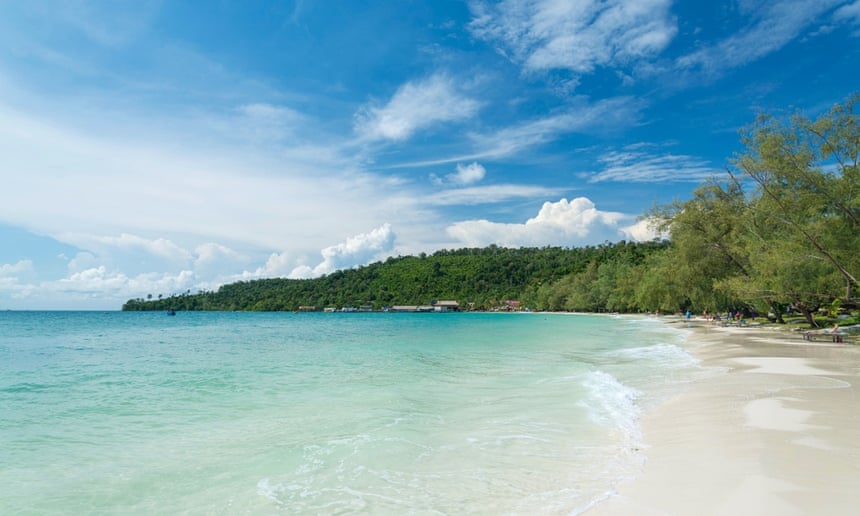
The island of Koh Rong, southern Cambodia.Photograph: Jack Malipan Travel Photography/Alamy
Cambodia’s sleepy south coast is skirted by pristine sandy beaches
shaded by coconut palms and casuarinas, while off shore there are
blissfully undeveloped islands. See our Top 10 beach hotels and bungalows in Cambodia for places to stay, from stylish resorts to rustic bungalows.
Sihanoukville and islands
Four hours from Phnom
Penh by bus, Sihanoukville is the largest and most developed town, which
is why you should make a beeline for Ream national park, 10 miles east,
for jungle walks, mountain treks, mango cruises, birdwatching, dolphin
spotting (from December to April), and snorkelling on the islands of Koh
Thmei and Koh Seh.
Of Sihanoukville’s beaches, busy Occheuteal boasts laidback bars;
Serendipity is more mellow and romantic, though transforms into party
central at night; and Otres is the most relaxed. If you’re looking to do
more than work on your tan, there’s sailing, diving, snorkelling,
kitesurfing, windsurfing, kayaking, paddle boarding, and surfing (Otres,
from May to October).
Kampot and Kep
From Sihanoukville, mini buses regularly trundle east to atmospheric
riverside Kampot (1½ hours), best known for producing the world’s best
pepper. In the old French Quarter, check into La Java Bleue (doubles from $55) in a colonial building with balconies; Rikitkitavi (doubles from $48) in a renovated barn on River Road; or The Columns (doubles from $45) in a row of charming shop-houses.
After taking in the colonial architecture and ambling along the
waterfront, take an excursion to Bokor national park and its eerie
abandoned French hill station (entry £9, tours from £15), cave temples
in the limestone hills of Phnom Chhnork and Phnom Sorsia, and a pepper
farm. Starling Farm,
an organic pepper plantation, has beautiful wooden villas and bungalows
at their new Starling Ridge Plantation Resort http://starlingridge.com
(from $30) .
With little else to do other than soak up the sun and feast on fresh
seafood at the crab market, seaside Kep, on a peninsula 45 minutes from
Kampot, is the perfect spot to end a trip to Cambodia. A retreat for
French colonials in the early 20th century and a playground for
Cambodia’s royalty and rich in the 1960s, the area is dotted with faded
shells of modernist villas, abandoned when the Khmer Rouge arrived.
Offshore, Koh Tonsay or Rabbit Island (25 minutes; public boat from £8,
private boat from £18) has empty beaches and excellent snorkelling.
Inland, lofty Kep national park has trails to hike and bike.
If a hillside resort with pool and panoramic ocean views appeals, try the highest, Le Bout du Monde (doubles from $45), which has stone and timber Khmer-style villas with verandas and hammocks, while The Vine Retreat
(doubles from $35), an on organic farm, offers yoga, meditation, free
bicycles and tours to a weaving centre. Back down by the water, don’t
miss sundowners overlooking the sea at the Sailing Club.
From Kep, there are buses to the Vietnamese border and the riverside
town of Ha Tien (1½ hours), part of a special economic zone, allowing
visa-free travel for 15 days. If you want to ventrue further into
Vietnam you need to return to Phonm Penh (buses to Ho Chi Minh Cit, five
hours, £10). .



No comments:
Post a Comment