In the village of the dammed
The Guardian
The hydro-political stakes grow as the Mekong flows south to richer Cambodia and Vietnam. For while Cambodia may rail at dams upstream in Laos, it too, is busy damming the Mekong and its tributaries. Over 40 have been started or are planned and together they will have major ecological impacts there and downstream in Vietnam.
Cambodia, which emerged in ruins from the Vietnam war and
the killing fields of the Khmer Rouge in the 1970s, may be a victim of
Lao’s dams, but it is itself planning to build over 40 large dams on the
Mekong and its tributaries in the name of addressing climate change.
All are expected to have major ecological impacts further south in
Vietnam and to force large scale evictions of communities.
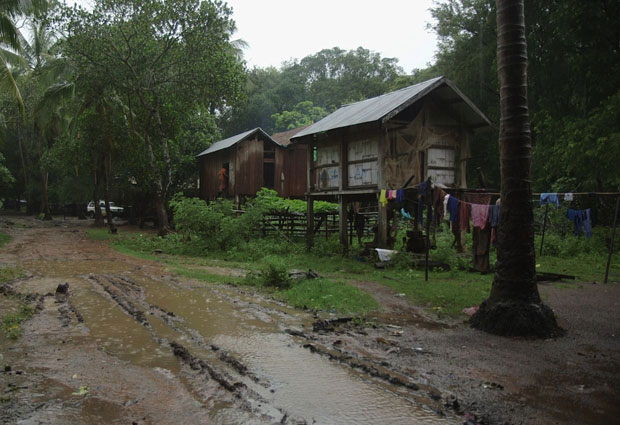
Kbal Romeas, a village of 132 tribal families, is preparing
to be flooded when the giant $800m Lower Sesan 2 dam is completed next
year. Its site, below the junction of the Srepok and and Sesan rivers,
is heavily guarded and barred by the Chinese dam builders but plans
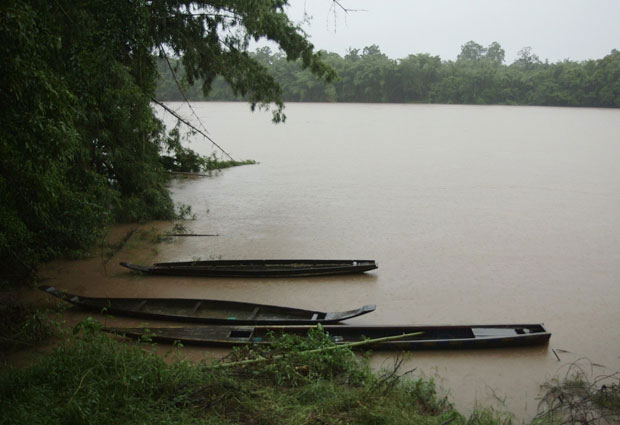
showed it will block two of the Mekong’s largest tributaries creating a
335 sq km reservoir that would force thousands of people to move.
Of all the 100-odd planned dams in the Mekong river basin,
the Lower Sesan 2 is expected to be the most ecologically and culturally
devastating because the rivers which it will harness contribute the
most sediment to the giant Mekong. If this is disrupted, says a
peer-reviewed study by Zim and others, it may lead to a 9.3% decline in fish biomass throughout the whole Mekong river basin.
“So many dams is too much. Cambodia is planning a complete
re-engineering of the environment,” says Bunthan Phou, director of the
3S Rivers protection network which is fighting for the survival of over
100 villages which will be flooded or affected by the dam. “The
electricity will go to the capital Phom Penh, but the people here will
pay for it. There will be immense suffering and devastation. Everyone
who lives off the three rivers will be affected. Upstream of the dam,
5,000 people will be moved in 21 villages. These tribal villages depend
on the rivers. People here believe in river and forest spirits. They
pray to the river to give them harvests and to catch wildlife. Their
world will be ruptured. They are scared.”
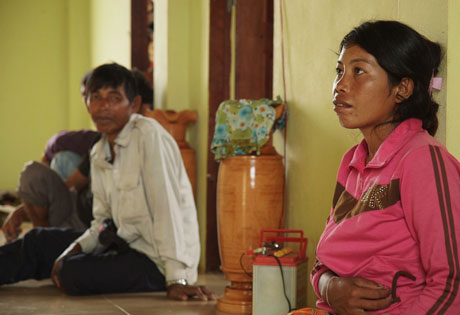
Fifty families have refused to move from Kbal Romeas, rejecting the compensation offer of new homes, electricity and land. “I built this house. I don’t want or need electricity. The land I have been offered is not enough to feed my family. The government took us to see the resettlement site but it is not for us. Most people do not want to move. When the water rises we will find somewhere else to live. I don’t want anything from the company. I just want to build for myself. There is a hill nearby but the company claims it is theirs. It is our ancestral land,” said Neang Char, a young woman whose husband had left her, saying he wanted to move to a resettlement village.
So many dams is too much. Cambodia is planning a complete re-engineering of the environment
Bunthan Phou Director of the 3S Rivers protection
With Oxfam, which is supporting communities threatened by
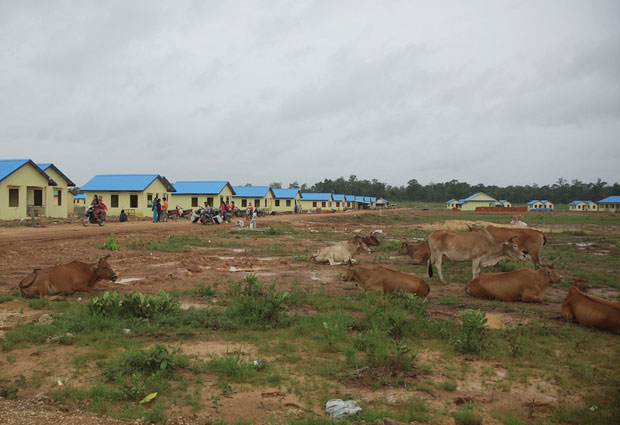
climate change and dams, we visited one of the so-far unnamed relocation
villages being built for dam-affected communities. It consisted of 130
identical blue-roofed one bedroomed, single-story houses laid out in
rows beside a main road. The first families had moved in, but the health
centre was not finished, the land around was mud and the developers
threatened to call the police if we talked to people. The electricity
was not connected.
“The roofs leak, the outdoor toilet overflows, we have no drinking water and it is not well built,” said Tous Sou, who, with fiance Ren Way, had moved there a month earlier from a condemned village. “The company promised to give us 5 hectares of land but we do not know where it is located or if it’s possible to grow anything. They said they would give us $200 for moving in early, but nothing has happened yet. Living here is very different. We were much better off before where we could fish and farm in the forest and we did not need money. How can we earn money? I get paid $2.40 a day to be a labourer, but we cannot live on that.”
No comments:
Post a Comment