

That parents should keep their expectations high falls in line with another psych finding — the Pygmalion effect, which states "that what one person expects of another can come to serve as a self-fulfilling prophecy"
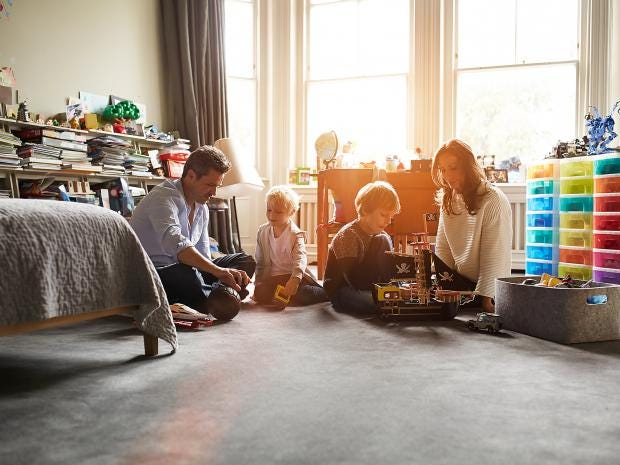
Parents of successful kids have these twelve things in common
Independent | 10 December 2016
Emotional contagion — or the psychological phenomenon where people "catch" feelings from one another like they would a cold — helps explain why. Research shows that if your friend is happy, that brightness will infect you; if she's sad, that gloominess will transfer as well. So if a parent is exhausted or frustrated, that emotional state could transfer to the kids.
Good parents want their kids to stay out of trouble, do well in school, and go on to do awesome things as adults.
And
while there isn't a set recipe for raising successful children,
psychology research has pointed to a handful of factors that predict
success.
Unsurprisingly, much of it comes down to the parents.
Here's what parents of successful kids have in common:
They make their kids do chores
"If kids aren't doing the dishes, it means someone else is doing that
for them," Julie Lythcott-Haims, former dean of freshmen at Stanford
University and author of "How to Raise an Adult" said during a TED Talks
Live event.
"And so they're absolved of not only the work, but of learning that
work has to be done and that each one of us must contribute for the
betterment of the whole," she said.
Lythcott-Haims believes kids raised on chores go on to become
employees who collaborate well with their coworkers, are more empathetic
because they know firsthand what struggling looks like, and are able to
take on tasks independently.
She bases this on the Harvard Grant Study, the longest longitudinal study ever conducted.
"By making them do chores — taking out the garbage, doing their own
laundry — they realize I have to do the work of life in order to be part
of life," she tells Tech Insider.
They teach their kids social skills
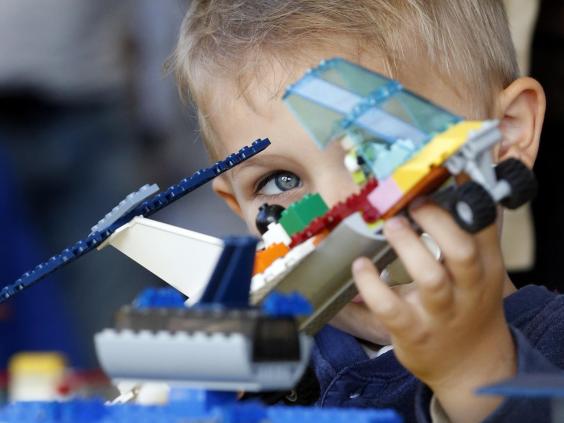
(Getty)
The 20-year study showed that socially competent children who could
cooperate with their peers without prompting, be helpful to others,
understand their feelings, and resolve problems on their own, were far
more likely to earn a college degree and have a full-time job by age 25
than those with limited social skills.
Those with limited social skills also had a higher chance of getting arrested, binge drinking, and applying for public housing.
"This study shows that helping children develop social and emotional
skills is one of the most important things we can do to prepare them for
a healthy future," said Kristin Schubert, program director at the
Robert Wood Johnson Foundation, which funded the research, in a release.
"From an early age, these skills can determine whether a child goes
to college or prison, and whether they end up employed or addicted."
They have high expectations
Using data from a national survey of 6,600 children born in 2001,
University of California at Los Angeles professor Neal Halfon and his
colleagues discovered that the expectations parents hold for their kids
have a huge effect on attainment.
"Parents who saw college in their child's future seemed to manage
their child toward that goal irrespective of their income and other
assets," he said in a statement.
The finding came out in standardized tests: 57% of the kids who did
the worst were expected to attend college by their parents, while 96% of
the kids who did the best were expected to go to college.
That parents should keep their expectations high falls in line with
another psych finding — the Pygmalion effect, which states "that what
one person expects of another can come to serve as a self-fulfilling
prophecy" — as well as what some teachers told Business Insider was most
important for a child's success.
They've attained higher educational levels

(Getty)
A 2014 study lead by University of Michigan psychologist Sandra Tang
found that mothers who finished high school or college were more likely
to raise kids that did the same.
Pulling from a group of over 14,000 children who entered kindergarten
in 1998 to 2007, the study found that children born to teen moms (18
years old or younger) were less likely to finish high school or go to
college than their counterparts.
Aspiration is at least partially responsible. In a 2009 longitudinal
study of 856 people in semirural New York, Bowling Green State
University psychologist Eric Dubow found that "parents' educational
level when the child was 8 years old significantly predicted educational
and occupational success for the child 40 years later."
They teach their kids math early on
A 2007 meta-analysis of 35,000 preschoolers across the US, Canada,
and England found that developing math skills early can turn into a huge
advantage.
"The paramount importance of early math skills — of beginning school
with a knowledge of numbers, number order, and other rudimentary math
concepts — is one of the puzzles coming out of the study," coauthor and
Northwestern University researcher Greg Duncan said in a press release.
"Mastery of early math skills predicts not only future math achievement,
it also predicts future reading achievement."
They develop a relationship with their kids
A 2014 study of 243 people born into poverty found that children who
received "sensitive caregiving" in their first three years not only did
better in academic tests in childhood, but had healthier relationships
and greater academic attainment in their 30s.
As reported on PsyBlog, parents who are sensitive caregivers "respond
to their child's signals promptly and appropriately" and "provide a
secure base" for children to explore the world.
"This suggests that investments in early parent-child relationships
may result in long-term returns that accumulate across individuals'
lives," coauthor and University of Minnesota psychologist Lee Raby said
in an interview.
They're less stressed
According to recent research cited by Brigid Schulte at The
Washington Post, the number of hours that moms spend with kids between
ages 3 and 11 does little to predict the child's behavior, well-being,
or achievement.
What's more, the "intensive mothering" or "helicopter parenting" approach can backfire.
"Mothers' stress, especially when mothers are stressed because of the
juggling with work and trying to find time with kids, that may actually
be affecting their kids poorly," study coauthor and Bowling Green State
University sociologist Kei Nomaguchi told The Post.
Emotional contagion — or the psychological phenomenon where people
"catch" feelings from one another like they would a cold — helps explain
why. Research shows that if your friend is happy, that brightness will
infect you; if she's sad, that gloominess will transfer as well. So if a
parent is exhausted or frustrated, that emotional state could transfer
to the kids.
The mums work outside the home

(Getty Images/iStockphoto)
According to research out of Harvard Business School, there are
significant benefits for children growing up with mothers who work
outside the home.
The study found daughters of working mothers went to school longer,
were more likely to have a job in a supervisory role, and earned more
money — 23% more compared to their peers who were raised by stay-at-home
mothers.
The sons of working mothers also tended to pitch in more on household
chores and childcare, the study found — they spent seven-and-a-half
more hours a week on childcare and 25 more minutes on housework.
"Role modeling is a way of signaling what's appropriate in terms of
how you behave, what you do, the activities you engage in, and what you
believe," the study's lead author, Harvard Business School professor
Kathleen L. McGinn, told Business Insider.
"There are very few things, that we know of, that have such a clear
effect on gender inequality as being raised by a working mother," she
told Working Knowledge.
They have a higher socioeconomic status
Tragically, one-fifth of American children grow up in poverty, a situation that severely limits their potential.
It's getting more extreme. According to Stanford University
researcher Sean Reardon, the achievement gap between high- and
low-income families "is roughly 30% to 40% larger among children born in
2001 than among those born 25 years earlier."
As "Drive" author Dan Pink has noted, the higher the income for the parents, the higher the SAT scores for the kids.
"Absent comprehensive and expensive interventions, socioeconomic
status is what drives much of educational attainment and performance," he
wrote.
They teach 'grit'

(Lucélia Ribeiro / Flickr)
In 2013, University of Pennsylvania psychologist Angela Duckworth won
a MacArthur "genius" grant for her uncovering of a powerful,
success-driving personality trait called grit.
Defined as a "tendency to sustain interest in and effort toward very
long-term goals," her research has correlated grit with educational
attainment, grade-point average in Ivy League undergrads, retention in
West Point cadets, and rank in the US National Spelling Bee.
It's about teaching kids to imagine — and commit — to a future they want to create.
They give their kids bias-proof names
A host of research shows just how much your name can affect your
lifetime success, from your hireability to your spending habits.
Career-wise, people with names that are common and easy to pronounce, for example, have been found to have more success.
They understand the importance of good nutrition and eating habits
Successful people recognize that good eating habits can help you focus and be productive throughout the day.
Dr. Catherine Steiner-Adair, a family and children's clinical
psychologist and author of books like "The Big Disconnect: Protecting
Childhood and Family Relationships in the Digital Age," told Slate that
developing food habits in kids that are both mentally and physically
healthy requires involvement from parents.
To help their kids develop a sense of body acceptance and a
body-positive self-image, she says parents need to role model good
attitudes about their own and others' bodies, healthy eating habits of
their own, and a positive attitude about food.

No comments:
Post a Comment